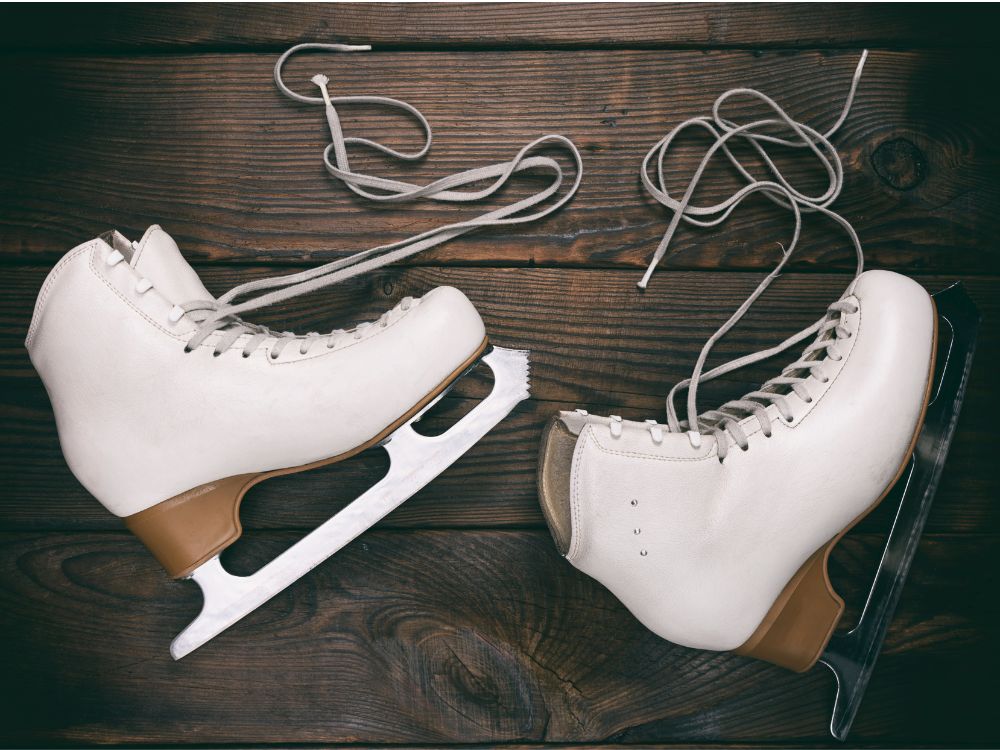
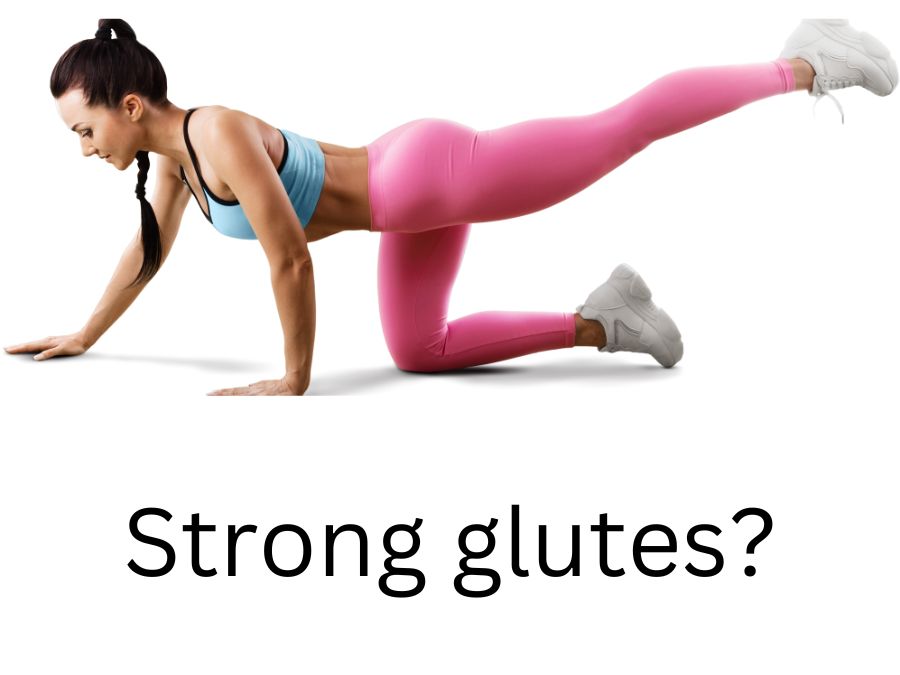
Figure skaters absolutely need strong glutes. The glute muscles are one of the most important power sources in figure skating, driving everything from jumps and spins to basic stroking down the ice. Strong glutes help stabilise the hips, maintain alignment, and generate the explosive force skaters rely on for high‑level performance.
Every major jump in figure skating — including the axel, lutz, and flip — requires powerful hip extension to lift the body off the ice. The glutes are the primary muscles responsible for this movement, making them essential for height, rotation, and safe landings. During spins and lifts, glute strength also supports balance, posture, and control, allowing skaters to stay centred and stable.
Even simple forward stroking depends heavily on the glutes. Each push comes from the back leg driving into the ice, using the glutes and quads together to create speed. The free leg extension that follows is also controlled largely by the glute muscles, helping skaters maintain clean lines and efficient technique.
Because glutes play such a central role in power, stability, and injury prevention, they are a key focus in off‑ice strength training for figure skaters at every level
During jumps, the glutes and quadriceps work together to create the explosive power needed to lift the body off the ice. The quadriceps extend the knee joint, while the glutes drive hip extension — and it’s the combination of these two movements that generates the force and momentum required for a successful take‑off. Without strong glutes supporting the jump, skaters lose height, rotation, and control.
In spins, both muscle groups play an important role in maintaining alignment and balance. Strong glutes stabilise the pelvis and prevent unwanted hip movement, helping skaters stay centred throughout the rotation. At the same time, strong quadriceps keep the knee joint steady, reducing wobbling and allowing for clean, controlled spin positions.
During lifts, the glutes and quads again work as a team to provide the strength and stability needed to lift and support a partner. The glutes supply power and protect the hips and lower back, while the quadriceps help maintain a solid knee position to support the partner’s weight safely and effectively.
How the glutes and quadriceps work together when skating in a straight line and why figure skaters need strong glutes
As we have discussed, figure skaters need strong glutes for jumps, but strong glutes are also needed when skating in a straight line, the glutes and quadriceps (quads) work together to provide the necessary power, stability, and balance for efficient and effective movement.
The glutes are responsible for extending the hip joint and maintaining proper alignment and stability of the pelvis. As the skater pushes off the ice with one leg, the glutes contract to extend the hip joint, generating power and momentum to propel the body forward. The glutes also play a key role in stabilizing the pelvis during skating, preventing excessive movement and maintaining proper posture and alignment.
The quads, on the other hand, are responsible for extending the knee joint which adds power and momentum to your push (on your pushing leg) and providing support for the body weight during skating (on your skating leg). As the skater pushes off the ice with one leg, the quads contract to extend the knee joint, providing support and stability to the leg and preventing it from collapsing under the weight of the body.
Together, the glutes and quads work in a coordinated manner to generate power and momentum, maintain stability and balance, and prevent injury during skating in a straight line. Strong glutes and quads are essential for efficient and effective skating, and skaters often focus on exercises that strengthen these muscle groups to improve their performance on the ice.
How are the glutes made up?
The glutes, or the gluteal muscles, are a group of three muscles located in the buttocks region of the body. These muscles include the gluteus maximus, gluteus medius, and gluteus minimus.
Gluteus maximus
The gluteus maximus is the single largest muscle in the human body, so yes, its important. It helps to keep the trunk upright, it literally helps to stand us up. It straightens the leg at the hip. So when your leg is bent at the hip, its the gluteus maximus contracting that straightens your leg, so it is fairly obvious that it is a hugely important muscle to a figure skater.
Gluteus medius
The gluteus medius deals with abduction, moving your leg to the side. It also stops your hip dropping when you lift one leg off the ground. The gluteus medius also deals with some of the rotation of the hip and general stability. As figure skaters spend most of their time on one leg or the other, the gluteus medius is hugely important.
Gluteus minimus
The gluteus minimus deals with stability and rotation. It acts as a stabiliser and also functions to internally rotate the joint at the hip.
All of these muscles together make up what we know as the glutes, the butt. They perform different functions, but it all adds up to make a stable, mobile and powerful hip joint.
What exercises to do to increase your glute strength for figure skating?
Well, I am not qualified to give the answer to this, as I am not a clinical professional. In terms of skating, the skating itself will massively increase the use of your glutes. In terms of off ice excercises, there are some qualoified proffesionals online, that have great info on you tube.
Try looking up Jeff Cavaliere MS PT CSCS on the Athleanx channel Jeff received his Masters Degree in Physical Therapy and Bachelor of Science in Physioneurobiology / Premedicine from the University of Connecticut in Storrs, CT.
Another great you tube resource is Dr Krisite Ennis nutritionist, certified strength and conditioning specialist, and physical therapist.
If you liked this article, check out out article on Is yoga good for figure skating?
Disclaimer
I am a figure skater, not a doctor. The information on this page is for information purposes only. If you want proper advice that is true for your physiology then then see a qualified doctor/physio therapist.